
The AAIDD Religion & Spirituality Interest Network recently contributed to a Council on Quality and Leadership (CQL) webinar and companion article on non-traditional spirituality, expanding how organizations understand and support spiritual expression among people with intellectual and developmental disabilities.
Tammy Besser and Sharon Coutryer, both members of the Interest Network, along with Michelle Johnson and representatives from Camphill Communities Ontario, presented on CQL’s webinar Non-Traditional Spirituality: Putting It Into Practice.
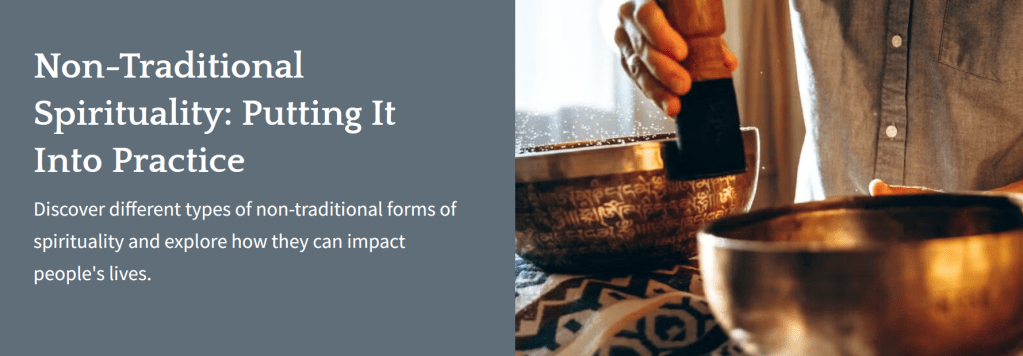
Their discussion centered on the lived reality that spiritual life often unfolds outside institutional religion. People express spirituality through nature, creativity, meditation, music, service activities, or community rituals. These practices support meaning, purpose, and connection even when they don’t look like formal worship.
Tammy Besser’s CQL article, Supporting Non-Traditional Spirituality, outlines the core themes that shape spirituality: connection to something greater than oneself, the search for meaning and purpose, and connection to or experience of the divine. Essential to understanding spirituality is that the individual defines what is sacred or holy for them. These themes helped frame both the article and the webinar. The article and webinar describe how activities such as gratitude jars, community gardens, drumming circles, open mic nights, or neighborhood clean-ups function as spiritual practices when they help someone orient toward meaning or transcendence.
The Interest Network’s contribution highlighted practical examples from diverse service contexts. Michelle Johnson shared her personal spiritual journey, and Camphill Communities Ontario described how ritual and meaning are woven into daily life. Presenters also demonstrated how staff education, discovery conversations, and creative problem-solving can reduce barriers to spiritual expression, especially for people who do not find resonance in traditional religious settings.
This work aligns closely with the mission of the AAIDD Religion & Spirituality Interest Network and with broader quality-of-life principles. Spirituality remains essential to personal well-being, yet organizations often limit support to formal, traditional, religious activity. Recognizing non-traditional pathways creates space for people to explore the practices that genuinely sustain them, whether through art, community, nature, service, or reflective disciplines.
Both the webinar and the article offer concrete guidance for organizations seeking to broaden their approach. They also demonstrate the influence of AAIDD R&S IN members in shaping national conversations about inclusive spiritual life.

 AAIDD Religion & Spirituality Network